What is Solar Pool Heating?
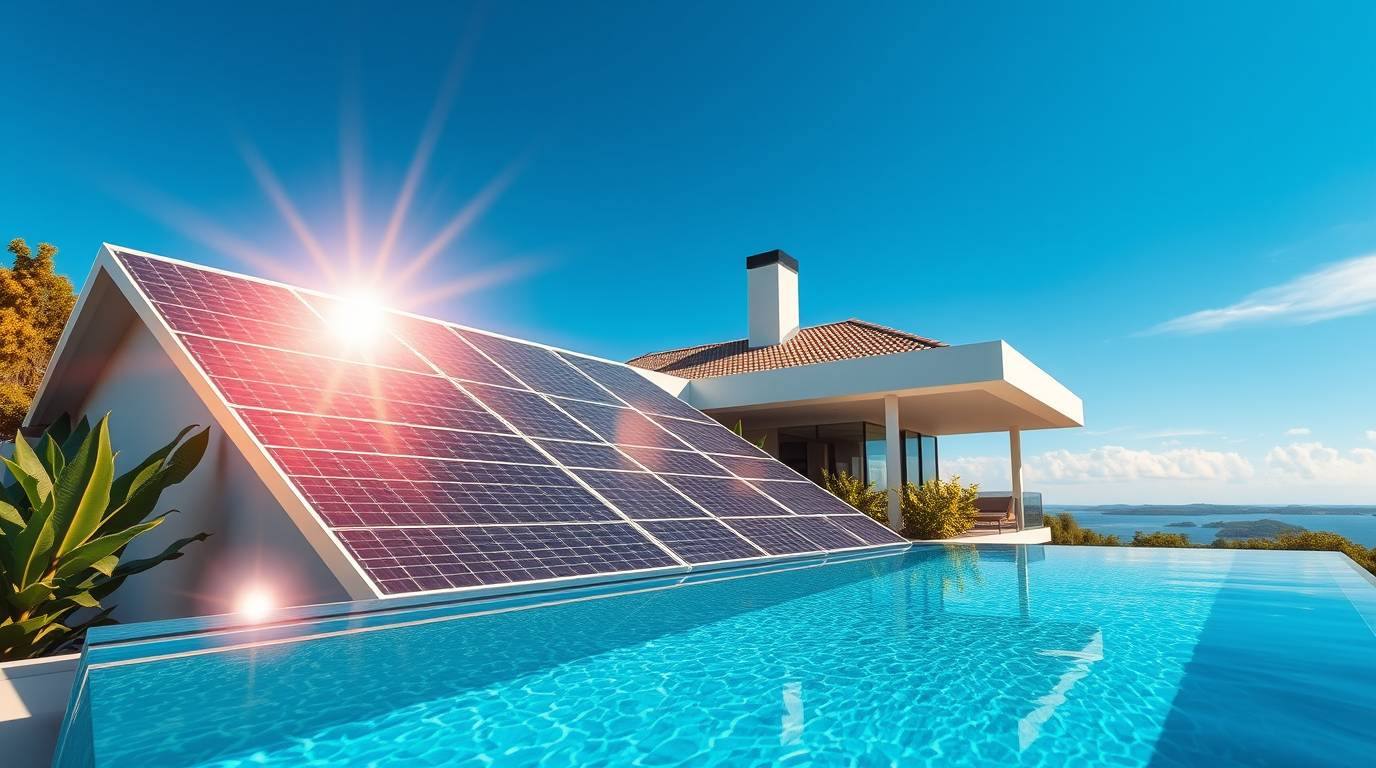
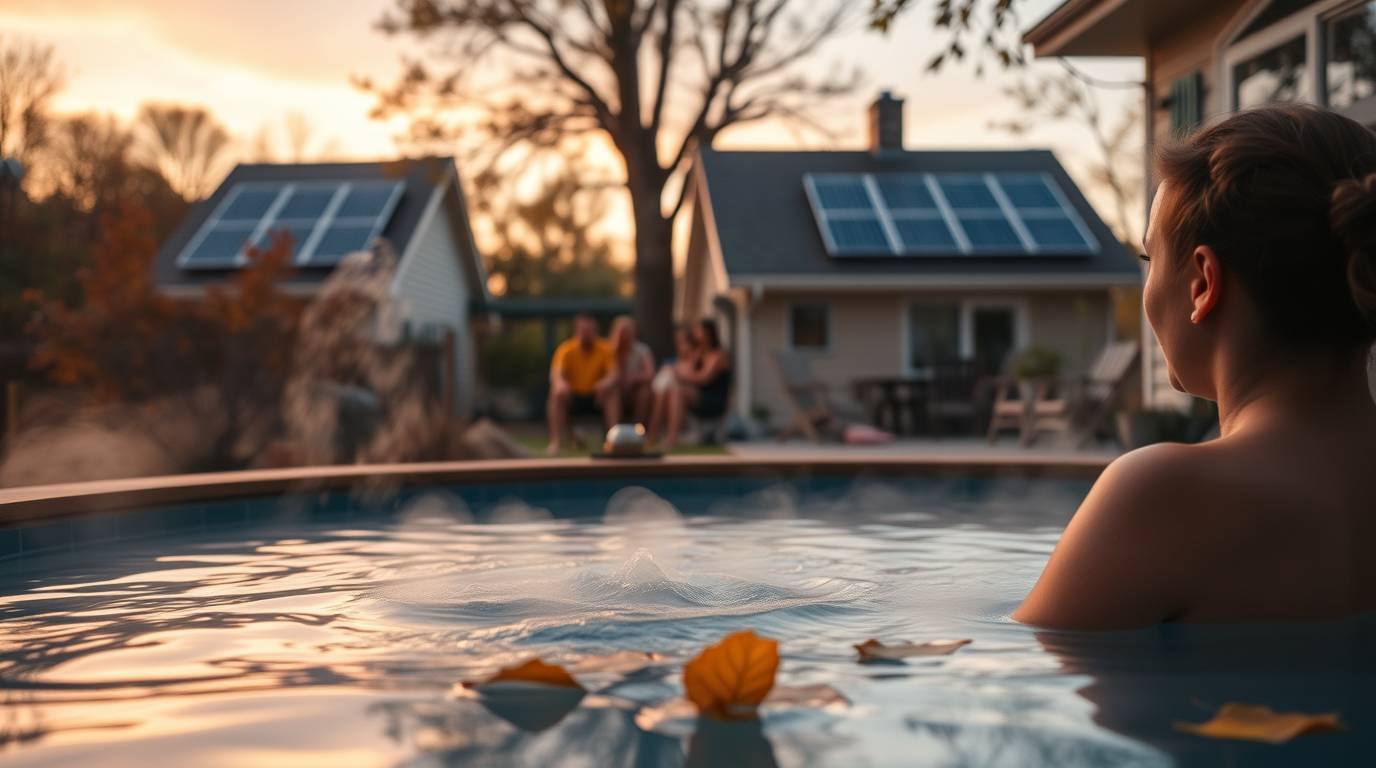
Picture this: it’s a crisp autumn morning. The air’s brisk, the leaves are golden, but your backyard pool? Still warm and perfectly inviting—thanks to the sun. That’s the magic of solar pool heating.
As energy prices climb and more of us look for eco-friendly ways to live, solar pool heating is becoming a standout solution. It’s not just about luxury—it’s about smart, sustainable comfort that keeps your swimming season going strong without racking up your utility bills.
This isn’t a gimmick. By harnessing the sun’s natural energy, solar pool heaters maintain a cozy water temperature that can stretch your swim time by months—or even all year in the right climate.
In this guide, we’ll walk you through how it works, why it’s worth considering, and how you can make it a part of your pool setup without the headaches or surprises.
How Solar Pool Heating Works
Here’s the cool part: the mechanics behind solar pool heating are surprisingly simple. It’s all about using solar thermal energy to warm your pool water. No sci-fi required—just smart use of nature.
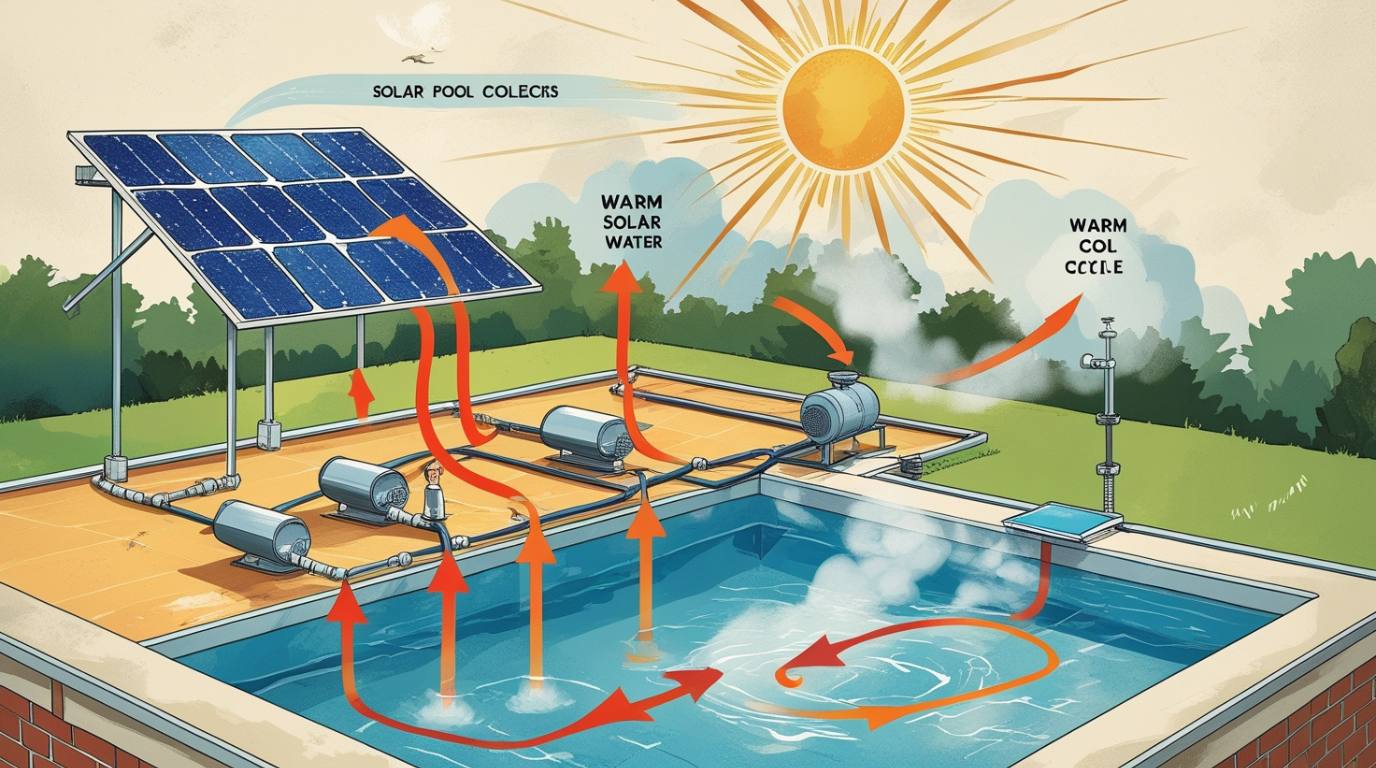
Here’s how it flows:
- Your pool water is pumped through a filter to clean out any debris.
- Then, the clean water is sent through solar collectors—usually installed on your roof or somewhere with great sun exposure.
- As the water travels through these collectors, it soaks up heat from the sun.
- That warm water is cycled back into your pool—raising the temperature bit by bit, all day long.
This process repeats as long as there’s sunshine, adjusting naturally to your heating needs.
According to the U.S. Department of Energy, these systems usually cost between $3,000 and $7,000 upfront—but they often pay for themselves in 1.5 to 7 years thanks to energy savings.
Components of a Solar Pool Heating System
Think of your solar pool heating setup like a team—each part plays a role, and when they work together, your pool stays warm efficiently and reliably.
Here’s what you’ll need to know:
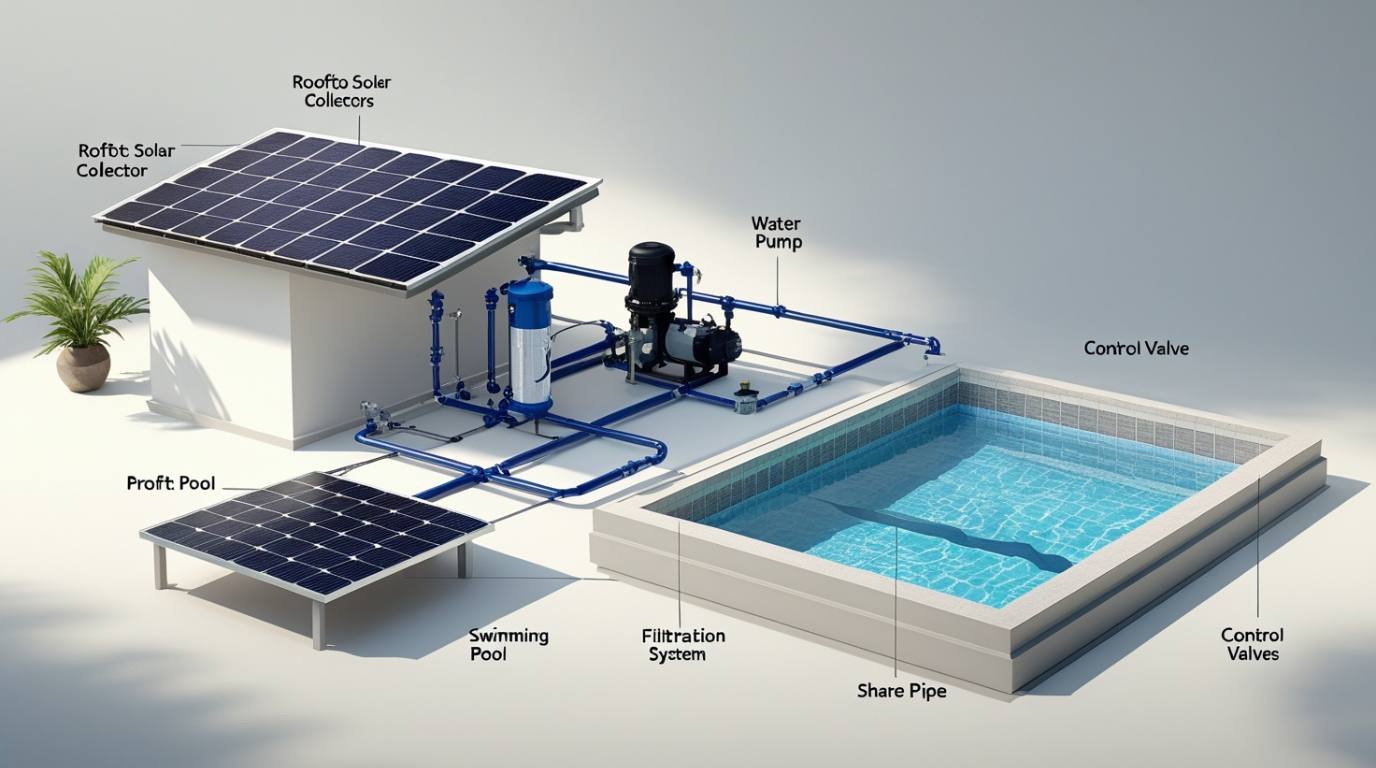
- Solar Collectors: These do the heavy lifting, capturing solar energy and transferring it to your pool water. Made of rubber, plastic, or glazed glass depending on the season and climate.
- Pump: Circulates water through the system. If your existing pump is strong enough, you might not need a new one.
- Filter: Cleans the water before it hits the collectors. A clean system is an efficient system.
- Flow Control Valve: This part directs water where it needs to go—through the collectors or around them, depending on conditions and temperature.
| Component | Purpose | Common Materials |
|---|---|---|
| Solar Collectors | Absorb and transfer solar heat | Rubber, plastic, or glazed glass |
| Pump | Circulate water through the system | Various (existing pool pumps often suffice) |
| Filter | Remove debris from pool water | Sand, cartridge, or DE filters |
| Flow Control Valve | Regulate water flow to collectors | PVC, automated smart systems |
The Science Behind Solar Thermal Energy
Solar thermal energy isn’t some complicated mystery—it’s a straightforward concept rooted in nature. By capturing solar radiation and converting it into usable thermal energy, solar pool heaters deliver heat exactly where it’s needed.
- Solar collectors are made with materials that absorb heat efficiently.
- When sunlight hits, it’s soaked up and transferred to the circulating pool water.
- Glazed or unglazed? That depends. Glazed collectors (with a glass cover) work better in colder climates. Unglazed ones are fine for warmer areas.
Efficiency comes down to things like sun exposure, the angle of your collectors, how fast water flows through them, and your local temps.
According to the National Renewable Energy Laboratory (NREL), well-designed systems can reach up to 80% efficiency in peak conditions.
Benefits of Using Solar Pool Heating
There’s a lot to love about solar pool heating—from the money you save to the eco-friendly impact you make.
Cost Savings and Efficiency
Sure, there’s an upfront investment—but after that, it’s mostly sunshine and savings:
- Zero Fuel Cost: Once it’s installed, the sun handles the heating for free.
- Low Operating Costs: Often uses your existing pool pump, which keeps energy use (and costs) low.
- Return on Investment: Most homeowners make their money back in just a few years.
In fact, solar-heated pools can cut heating costs by as much as 70% compared to gas or electric heaters, according to Energy Star.
Environmental Impact
Switching to solar isn’t just good for your wallet—it’s a vote for the planet:
- Fewer Emissions: No fossil fuels means a significantly lower carbon footprint.
- Renewable Power: Solar is endless, unlike gas or coal.
- Sustainability Matters: Going solar supports a cleaner, more responsible way to live and play.
Choosing the Right Solar Pool Heater
Picking the right system is all about matching your setup with your climate, space, and goals. Here’s what to keep in mind:
- Location: Your collectors need plenty of sun—ideally on a south-facing roof or open area with minimal shade.
- Pool Size: Bigger pools need more collector surface area—usually around 50% to 100% of your pool’s surface.
- Budget: Consider long-term savings and don’t forget to look into incentives or rebates in your area.
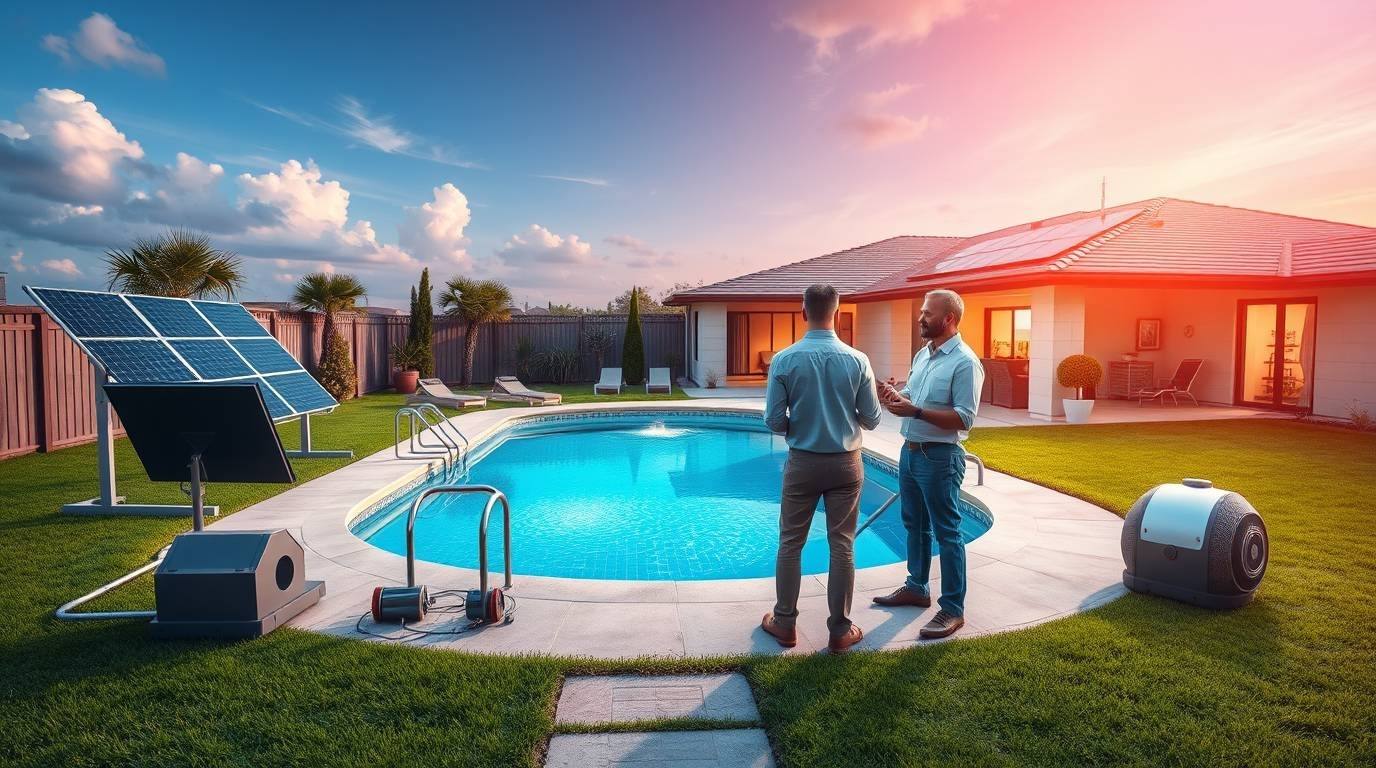
Work with a licensed pro to do a solar site analysis and find the best setup for your home.
Installation Process of Solar Pool Heaters
Installing a system is usually best left to the pros. Here’s what the process generally looks like:
- Assessment: Check sun exposure, space, and current pool equipment.
- System Design: Decide on collector size and layout based on climate and pool needs.
- Installation: Mount the collectors and connect them to your pool’s filtration system.
- Integration: Add valves, controllers, and sensors to automate heating.
- Testing: Ensure everything’s working smoothly before you dive in.
Always choose contractors who know local codes and have experience with solar systems to avoid hiccups later.
Maintenance Tips for Solar Pool Heating Systems
Keeping your solar system running well is simple and doesn’t take much time. A little upkeep goes a long way.
- Collector Inspections: Check for cracks, leaks, or buildup. Clean as needed for maximum efficiency.
- Pump and Filter Care: Keep them in good shape to ensure smooth water flow.
- System Monitoring: Watch that valves and controllers are responding correctly to sun and temp changes.
Stay on top of things, and your system could easily last 15–20 years—or even longer.
Frequently Asked Questions About Solar Pool Heating
Q: How long does it take to heat a pool with solar?
A: It depends on your pool’s size, the weather, and the system, but most pools heat up in 2 to 5 days of steady sun.
Q: Can solar heating work in cloudy weather?
A: Yes—just not as quickly. Even on cloudy days, solar systems gather diffuse sunlight, though heat-up times may stretch a bit.
Need more? Check out the U.S. Department of Energy’s Guide to Solar Pool Heating.
Next Steps: How to Get Started with Solar Pool Heating
If you’re ready to make the leap, here’s your jumpstart plan:
- Evaluate Your Pool Area: Look for sunny, unobstructed space for collectors.
- Consult a Professional Installer: Get expert advice on sizing and placement.
- Explore Incentives: Check for rebates, tax credits, or financing to help with upfront costs.
- Schedule Regular Maintenance: Keep it running smooth with yearly checkups.
- Enjoy Your Pool Longer: Dive in, stretch out your season, and leave the heating bills behind.

Lily Strauss is an environmental and energy expert based in Boulder, Colorado, with a background in Environmental Science from Stanford and Energy Policy at a London College. She began her career in environmental consulting before moving into energy policy, contributing to major sustainability initiatives with NGOs and the U.S. Department of Energy. Currently a senior advisor at a global climate think tank, she focuses on energy equity and climate resilience. Outside of work, Lily enjoys rock climbing, photography, and urban farming, and is passionate about climate justice and youth education in sustainability.